The gaming landscape is evolving at breakneck speed, and players everywhere are asking the same question: what will define gaming trends 2026? From next-gen console capabilities and AI-driven mechanics to shifting multiplayer metas and performance optimization breakthroughs, the industry is entering a phase where innovation isn’t optional—it’s expected.
If you’re here, you’re likely looking for a clear breakdown of what’s actually changing, which trends are worth paying attention to, and how they’ll impact the way you play, compete, or invest in new hardware. This article cuts through the hype to highlight the most important developments shaping competitive gameplay, console performance, cross-platform ecosystems, and community-driven content.
Our insights are built on in-depth analysis of emerging game mechanics, hands-on console evaluations, multiplayer balance shifts, and technical optimization strategies already gaining traction across major titles. By the end, you’ll have a practical understanding of where the industry is headed—and how to stay ahead of it.
Beyond the Horizon: What Gaming Will Look Like in 2026
By 2026, five shifts will separate hype from permanence. First, AI-driven NPCs (non-player characters that react dynamically) will remember player choices across seasons, not just missions. Second, modular game engines will let studios swap mechanics like plugins, cutting development cycles. Third, cloud-native consoles will stream processing, turning hardware into access points. Fourth, player-owned economies built on verified digital ownership will mature beyond speculation. Finally, adaptive difficulty systems will personalize challenge in real time.
Critics call them extensions of tech, but integration is decisive. Track gaming trends 2026 with a mindset.
The AI Revolution: When NPCs Start to Think for Themselves
The days of stiff, repetitive NPC dialogue are fading fast. Thanks to advanced machine learning, developers are building characters that generate dynamic narratives—stories that evolve based on your choices, playstyle, and even hesitation. Instead of selecting from preset dialogue trees (we’ve all seen those), AI systems analyze player behavior in real time and create branching outcomes that feel organic. Think less “press X to continue” and more living, reactive worlds.
Procedural Content Generation (PCG) 2.0 takes this further. Traditionally, procedural generation meant randomized maps. Now, AI can design quests, factions, ecosystems, and enemy hierarchies on the fly. The result? Near-infinite replayability without recycled fetch quests. If you’re wondering how this fits into gaming trends 2026, it’s simple: personalization is becoming the default expectation.
Smarter opponents are also changing strategy. Instead of memorizing attack loops, players face AI that adapts, flanks, coordinates, and even counters your favorite tactics. To stay competitive:
- Rotate strategies instead of relying on one “meta” build
- Observe enemy adaptation patterns
- Upgrade companions with complementary skills
Finally, AI-driven optimization tools like DLSS and FSR upscale visuals intelligently, boosting frame rates without sacrificing fidelity. Pro tip: enable these settings before lowering resolution—you’ll often gain performance with minimal visual loss.
Hyper-Immersion: Blurring the Lines Between the Game and Reality
The Hardware Revolution
The next wave of VR and AR headsets is defined by lighter frames (under 400 grams), 4K-per-eye resolution, and fully standalone processing—no PC tether required. Higher refresh rates (120Hz and above) reduce motion blur and latency, which means fewer headaches and more believable worlds. That clarity directly translates to competitive advantage: sharper visuals make enemy silhouettes easier to spot and environmental cues more readable. Critics argue VR remains niche due to cost and space constraints. Fair point—but prices have steadily dropped since 2023, and inside-out tracking eliminates the need for external sensors, making setup as simple as putting on a headset.
Haptics are evolving beyond controller rumble. Full-body suits now map impact zones with localized vibration motors, while thermal modules simulate heat from explosions or icy wind. Experimental scent emitters even release subtle environmental aromas (yes, survival horror just got scarier—Silent Hill fans, brace yourselves). The benefit isn’t novelty; it’s spatial awareness. When your body feels direction and force, reaction time improves.
Mixed Reality (MR) gaming pushes further. Using LiDAR and spatial mapping, games project enemies onto your walls and transform couches into barricades. As gaming trends 2026 accelerate toward immersion, your living room becomes the battlefield—no green screen required.
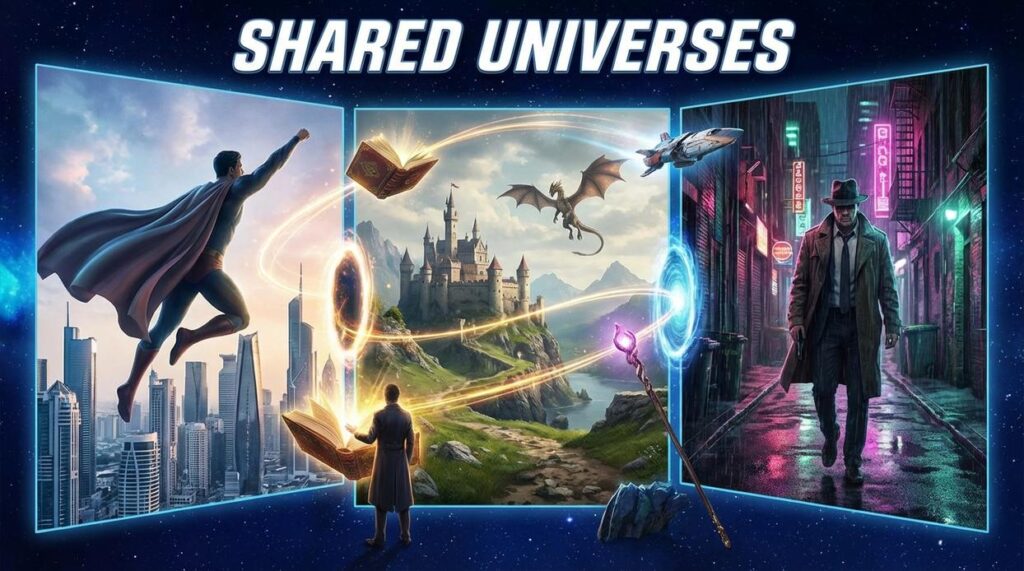
The New Multiplayer Meta: Beyond Cross-Play to Shared Universes

First, the “lobby” is no longer a menu—it’s a persistent social hub (a living, always-online space where players gather). Think Fortnite concerts or Roblox plazas, but bigger. Instead of waiting in silence, you trade gear, form squads, or discover new modes organically. The benefit? Your time in-game feels social and productive, not like dead air.
Meanwhile, seamless platform integration means your progression, unlocks, and identity follow you anywhere. Start on console, continue on mobile, finish on PC—no friction. In gaming trends 2026, that continuity isn’t a perk; it’s the baseline. You invest once, and your progress travels with you (finally).
On top of that, community-driven content gives players creation tools once reserved for studios. Custom modes, new maps, even full experiences extend a game’s lifespan. Just look at how viral games capture millions of players overnight: https://dorgenven.com/how-viral-games-capture-millions-of-players-overnight/. More creativity means more replay value—and more reasons to log back in.
Cloud Gaming Matures: The Console Becomes an App
Cloud gaming is no longer a tech demo—it’s becoming invisible. Thanks to edge computing (processing data closer to the player to reduce delay) and AI-driven predictive input (systems that anticipate button presses milliseconds before they happen), latency is shrinking to the point where most genres feel native. In practical terms, that means you can jump into a competitive shooter on a tablet and not feel like you’re fighting the Wi-Fi. The benefit? No expensive hardware upgrades—just instant access.
Meanwhile, subscription services like Xbox Game Pass and PlayStation Plus are evolving into all-you-can-play ecosystems. Instead of waiting on 80GB downloads, you tap and play across devices. For players, that means flexibility, lower upfront costs, and massive libraries on demand (your backlog just lost its favorite excuse).
And as gaming trends 2026 suggest, generational console leaps may fade. Rather than buying new boxes every seven years, you’ll choose the best service, strongest library, and smoothest performance—putting power, finally, in your hands.
Player-Driven Economies and True Digital Ownership
For years, in-game economies were closed systems—meaning developers controlled item supply, pricing, and trading. Players bought skins or weapons, but they didn’t truly own them; they held a revocable license (like renting furniture for a house you can’t sell). However, blockchain-backed ownership and open marketplaces are shifting that balance.
Critics argue this model invites speculation and turns games into stock exchanges. That concern isn’t baseless—early “play-to-earn” systems often collapsed under inflationary pressure. Yet the evolution toward play-and-earn reframes value. Instead of grinding repetitive tasks for tokens, players earn rare, skill-based drops from high-difficulty raids or competitive ladders. In other words, effort and mastery matter again.
Meanwhile, interoperability—the ability to use a single digital asset across multiple games—could redefine identity. Imagine a legendary sword usable in different fantasy titles, much like carrying your gamer tag across platforms. Skeptics say publishers will never cooperate. Still, cross-platform play once seemed impossible, and now it’s standard in gaming trends 2026.
Moreover, robust crafting systems are turning creators into entrepreneurs. Designers mint cosmetic items, musicians compose in-game soundtracks, and architects build virtual spaces for profit. Pro tip: scarcity mechanics must be transparent to avoid market crashes. Ultimately, sustainable economies reward skill, creativity, and long-term engagement—not just hype cycles.
Your Loadout for the Future of Gaming
First, let’s recap: smarter AI that adapts, deeper immersion through VR and haptics, unified multiplayer ecosystems, ubiquitous cloud access, and player-owned economies. Some skeptics argue these shifts are overhyped, saying gaming trends 2026 will look much like today. However, history shows tech leaps compound quickly—remember how battle royale went from niche to norm? By understanding these mechanics, you’re better positioned to adapt, optimize, and compete. So, which evolution excites you most? Keep tabs on pioneering studios and watch platforms like industry updates. The next meta is loading—make sure you’re ready now.
Level Up Your Strategy for 2026
You came here to understand where the industry is heading and how to stay competitive—and now you have a clear view of the forces shaping gaming trends 2026. From evolving multiplayer metas to smarter optimization tactics and next-gen console performance, you’re no longer guessing—you’re preparing.
The real challenge isn’t information overload. It’s falling behind while others adapt faster, optimize better, and capitalize on emerging mechanics before they go mainstream. Missing these shifts can mean lower rankings, weaker builds, and wasted upgrades.
Now it’s time to act. Start refining your setup, test the strategies discussed, and track upcoming patches and hardware updates closely. Join thousands of competitive players who rely on our in-depth breakdowns and optimization insights to stay ahead of the curve.
Don’t wait for the meta to leave you behind—tap into the latest strategies, upgrade your approach, and dominate your next session today.