
If you’re searching for actionable insights on esports tournament preparation, you’re likely looking for more than generic tips. Competitive gaming has evolved rapidly, with shifting metas, hardware optimization demands, and smarter team coordination strategies separating casual contenders from serious competitors. This article is designed to give you a clear, up-to-date breakdown of what actually impacts performance—from refining in-game mechanics and understanding current multiplayer trends to optimizing your console or PC setup for peak reliability under pressure.
We’ve analyzed recent tournament play, reviewed evolving game mechanics, and studied how top players adapt to meta shifts to ensure the guidance here reflects what’s working right now—not outdated strategies from past seasons. Whether you’re preparing for your first local bracket or aiming to sharpen your edge in higher-stakes competition, you’ll find practical insights focused on real competitive advantage, not theory. Let’s break down what truly moves the needle when it’s time to compete.
Countless hours in the practice lobby, yet tournament day falls flat. Frustrating, right? The truth is the gap between sharp mechanics and clutch performance is rarely about grinding more matches; it’s about preparation with purpose. When you build a structured esports tournament preparation routine—covering meta analysis, opponent scouting, mindset drills, sleep, and nutrition—you convert skill into consistency. In other words, you stop hoping to pop off and start planning to.
The payoff? Faster adaptation, calmer decision-making, and higher placements. Instead of burnout, you gain clarity. Instead of tilt, resilience. That’s how practice finally translates into podium finishes under pressure consistently.
VOD Review – The Unseen Advantage
Reviewing your own VODs (Video on Demand recordings of completed matches) is like watching game tape in traditional sports. A 2023 study from the International Journal of Esports found structured self-review improved decision-making speed by 17% among competitive players. Pause every death and ask: was it positioning, cooldown misuse, or poor communication? Patterns emerge quickly (and sometimes painfully).
When studying pro VODs, focus on rotations, resource timing, and risk assessment—not flashy mechanics. Pros adapt to meta shifts (the dominant strategy shaped by patches and player behavior) weeks before ranked ladders catch up. That’s why esports tournament preparation always includes layered VOD analysis.
Watch for decisions, not highlights.
Structured Scrims vs. Ranked Grind
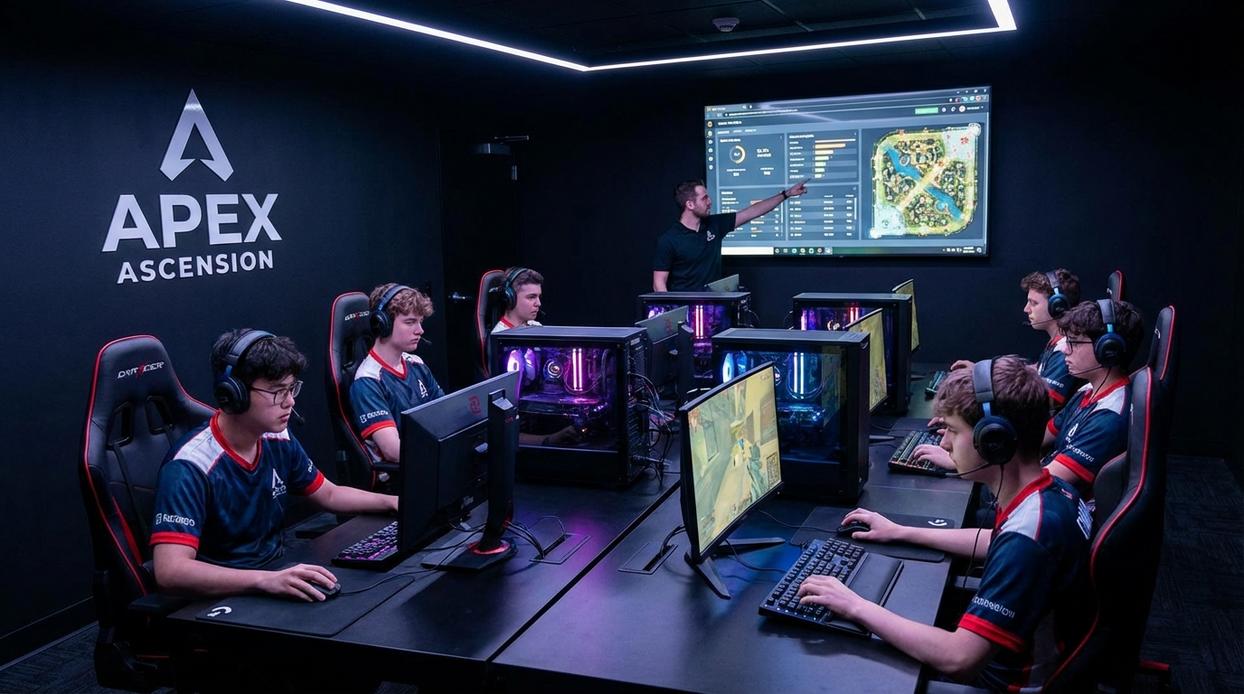
Ranked matches sharpen mechanics under pressure, but scrims—organized practice matches between teams—build coordination and strategy. Data from multiple Tier-2 leagues shows teams scrimming at least three times weekly improved objective control rates by over 20% across a season. Ranked teaches individual consistency; scrims refine communication, role clarity, and set plays.
To find a scrim team:
- Join competitive Discord hubs.
- Share ranked stats and role preferences.
- Schedule consistent practice blocks.
Set one goal per scrim (e.g., early-game vision control). Grinding endlessly without structure feels productive (it isn’t). Pro tip: Record scrims separately from ranked to track strategic growth.
Targeted Drills and Warm-ups
Mechanical consistency depends on deliberate drills. Aim trainers and in-game practice modes build muscle memory—automated motor responses formed through repetition. Research in motor learning shows short, focused repetitions outperform long, unfocused sessions.
Sample 15-minute warm-up:
- 5 minutes tracking drills.
- 5 minutes flick accuracy.
- 5 minutes movement and ability combos.
Keep it consistent before every session. Players who warm up demonstrate measurably faster reaction times (University of Chichester, 2022). Think of it like stretching before a sprint—skipping it might feel fine until you miss the shot that mattered most.
Dialing It In: Optimizing Your Gear and Settings
Hardware Check & Consistency
Before any serious session—especially during esports tournament preparation—lock in your setup. Test your mouse for sensor issues, confirm your keyboard has no ghosting (missed or duplicated keystrokes), and make sure your headset delivers clear directional audio. A flickering monitor or inconsistent polling rate can cost you milliseconds (and matches). Most importantly, avoid changing sensitivity or hardware the week before competition. Muscle memory—your brain’s learned movement patterns—depends on repetition. Even small DPI tweaks can throw off aim.
In-Game Settings for Performance
Prioritize frame rate over flashy visuals. Lower shadows, disable motion blur, and reduce post-processing to maximize FPS (frames per second). Higher FPS improves responsiveness and input clarity (Source: NVIDIA Performance Guidelines). Refine:
- Keybinds: Keep high-frequency actions within easy reach.
- Audio cues: Boost footsteps, reduce music.
- Crosshair placement: Keep it head-level to minimize reaction time.
For deeper insight into how performance data shapes optimization, explore the role of data analytics in modern game design.
Creating Your Battle Station
Minimize distractions. Keep cables managed, lighting consistent, and chair height aligned with desk level to prevent strain. Mirror tournament conditions whenever possible (yes, even the monitor distance). Comfort isn’t luxury—it’s competitive stability.
Conquering Tournament Nerves
Butterflies before a match are normal; unmanaged, they become performance anxiety—your body’s stress response that tightens muscles and clouds judgment. Start with box breathing: inhale four counts, hold four, exhale four, hold four. This steadies heart rate and sharpens focus. Next, practice visualization, mentally rehearsing plays and reactions. Your brain encodes imagined reps similarly to real ones (Guillot & Collet, 2008). Finally, use positive self-talk—short, directive cues like “steady hands” or “play the plan.” Instead of labeling pressure as danger, reframe it as excitement. Physiologically, they’re identical; interpretation changes performance (Brooks, 2014). The benefit is control—you compete composed, not overwhelmed.
The Physiology of Performance
However, mindset collapses without fuel. Cognitive function—your brain’s ability to process information, react, and decide—depends heavily on physical health. First, protect sleep. Seven to nine hours on a consistent schedule improves reaction time and strategic thinking (Walker, 2017). Even one short night can impair accuracy like mild intoxication. Next, hydrate. As little as 2% dehydration can reduce attention and working memory (Ganio et al., 2011). Additionally, prioritize balanced pre-game nutrition: complex carbohydrates, lean protein, and healthy fats. Avoid high-sugar snacks that spike glucose and trigger crashes mid-match (we’ve all felt that sudden fog). Light physical activity, such as a brisk walk or mobility drills, increases blood flow and alertness before esports tournament preparation. The payoff is tangible—faster reactions, steadier hands, and clearer calls under pressure. Treat your body like high-performance hardware, and your gameplay runs smoother. Over time, these habits compound into consistent, tournament-ready performance when stakes are highest truly.
Your Game Day Ritual: The Final Pre-Launch Sequence
You’ve done the hard work. Weeks of practice, scrims, VOD reviews—now it’s about execution.
Tournament day anxiety doesn’t come from nowhere. It’s usually the echo of rushed prep or inconsistent routines. Back in 2019, when structured esports tournament preparation started becoming standard across pro teams, performance consistency noticeably improved (as reported by multiple team performance analyses). That wasn’t luck—it was structure.
By preparing your mind, body, and strategy, you control every variable you can. And when variables shrink, confidence grows. Some argue that spontaneity wins games. Sure, clutch moments matter. But clutch favors the prepared.
60-Minute Pre-Game Checklist
- 60–45 min: Light meal with protein and complex carbs; hydrate steadily.
- 45–30 min: 15-minute mechanical warm-up (aim drills, movement reps).
- 30–15 min: Quick review of key strategies and opponent tendencies.
- 15–5 min: Mental reset—deep breathing, visualization, clear intention.
- Final 5: Gear check. No surprises.
After months of effort, this hour locks it in. (Think of it as your launch sequence.)
As esports teams meticulously fine-tune their strategies and gear up for competition, gamers everywhere can’t help but feel the excitement building for upcoming tournaments—and with the anticipation surrounding the Most Anticipated Console Releases of the Year, it’s clear that the future of gaming is brighter than ever.
Level Up Your Competitive Edge
You came here to sharpen your skills and gain a real advantage in competitive play—and now you have the insights to do exactly that. From mastering core mechanics to optimizing your setup and understanding the evolving multiplayer meta, you’re no longer guessing. You’re preparing with purpose.
The real pain point for most players isn’t lack of passion—it’s inconsistency. Missed mechanics, poor optimization, and weak strategy under pressure are what hold talented gamers back. The difference between casual play and serious competition comes down to disciplined practice and smart esports tournament preparation.
Now it’s your move.
Apply these strategies in your next sessions. Refine your loadouts, analyze your gameplay, and stay ahead of patch changes and meta shifts. If you’re serious about climbing rankings and dominating tournaments, don’t leave your performance to chance.
Join thousands of competitive players who rely on our proven gaming insights and optimization tips to stay ahead of the curve. Start implementing what you’ve learned today and turn your preparation into podium finishes.
 Valdran Vosswyn is the kind of writer who genuinely cannot publish something without checking it twice. Maybe three times. They came to level-up optimization tips through years of hands-on work rather than theory, which means the things they writes about — Level-Up Optimization Tips, Trending Game Buzz, Console Releases and Reviews, among other areas — are things they has actually tested, questioned, and revised opinions on more than once.
That shows in the work. Valdran's pieces tend to go a level deeper than most. Not in a way that becomes unreadable, but in a way that makes you realize you'd been missing something important. They has a habit of finding the detail that everybody else glosses over and making it the center of the story — which sounds simple, but takes a rare combination of curiosity and patience to pull off consistently. The writing never feels rushed. It feels like someone who sat with the subject long enough to actually understand it.
Outside of specific topics, what Valdran cares about most is whether the reader walks away with something useful. Not impressed. Not entertained. Useful. That's a harder bar to clear than it sounds, and they clears it more often than not — which is why readers tend to remember Valdran's articles long after they've forgotten the headline.
Valdran Vosswyn is the kind of writer who genuinely cannot publish something without checking it twice. Maybe three times. They came to level-up optimization tips through years of hands-on work rather than theory, which means the things they writes about — Level-Up Optimization Tips, Trending Game Buzz, Console Releases and Reviews, among other areas — are things they has actually tested, questioned, and revised opinions on more than once.
That shows in the work. Valdran's pieces tend to go a level deeper than most. Not in a way that becomes unreadable, but in a way that makes you realize you'd been missing something important. They has a habit of finding the detail that everybody else glosses over and making it the center of the story — which sounds simple, but takes a rare combination of curiosity and patience to pull off consistently. The writing never feels rushed. It feels like someone who sat with the subject long enough to actually understand it.
Outside of specific topics, what Valdran cares about most is whether the reader walks away with something useful. Not impressed. Not entertained. Useful. That's a harder bar to clear than it sounds, and they clears it more often than not — which is why readers tend to remember Valdran's articles long after they've forgotten the headline.